
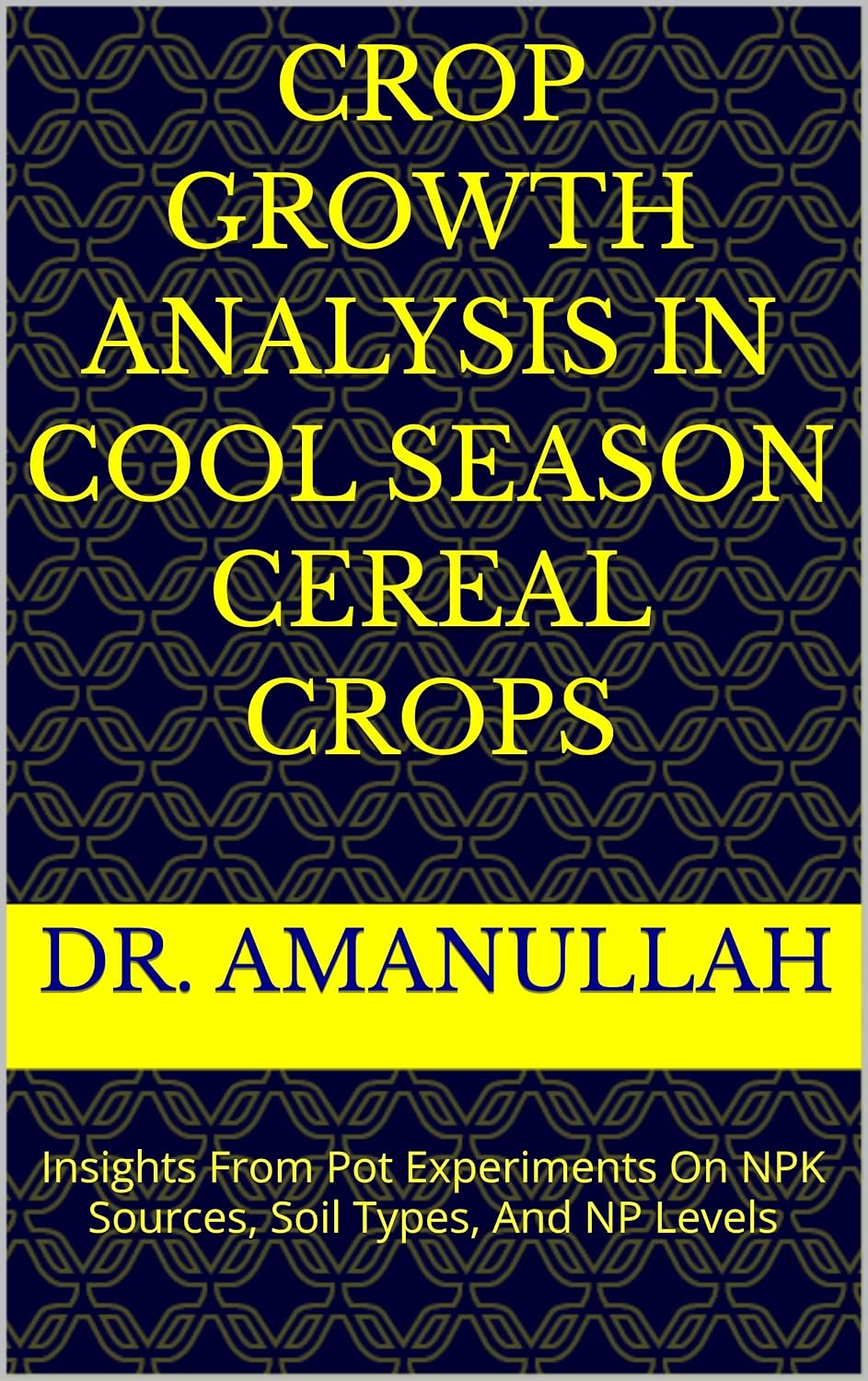
CROP GROWTH ANALYSIS IN COOL SEASON CEREAL CROPS: Insights From Pot Experiments On NPK Sources, Soil Types, And NP Levels
Product details
| Management number | 233411336 | Release Date | 2026/06/27 | List Price | US$90.00 | Model Number | 233411336 | ||
|---|---|---|---|---|---|---|---|---|---|
| Category | |||||||||
This book synthesizes findings from three controlled pot experiments designed to advance understanding of crop growth analysis in cool-season cereal crops. By systematically evaluating the effects of NPK fertilizer sources, soil types, and nitrogen–phosphorus (NP) levels, the study provides clear physiological evidence on how nutrient balance and substrate quality regulate cereal growth, biomass accumulation, and resource partitioning.Across all experiments, growth measurements taken at 30, 60, and 90 days after emergence revealed that cereal performance is strongly governed by balanced nutrient supply, soil physical–chemical properties, and species-specific growth strategies. Among the winter cereals, barley consistently exhibited superior growth efficiency and biomass production, while wheat showed strong root development and early vigor, oats demonstrated pronounced late-stage canopy expansion, and **rye maintained intermediate but stable growth traits.Results from the NPK source experiment clearly demonstrated that balanced fertilizer formulations enhanced plant height, leaf area development, dry matter accumulation, and growth rates, whereas unbalanced or excessively nitrogen-rich sources severely restricted root growth, disrupted shoot–root balance, and reduced overall performance. These findings highlight the risks of improper fertilizer selection and the importance of nutrient harmony rather than high nitrogen input alone.The soil type experiment confirmed that soil quality is a critical driver of nutrient use efficiency and biomass partitioning. Nutrient-rich, well-structured substrates promoted greater root development, leaf area, and total dry matter, while low-quality soils consistently limited growth regardless of crop species. Differences between wheat and rye further emphasized adaptive strategies, with wheat favoring biomass accumulation and rye optimizing canopy efficiency and root exploration.The NP levels experiment in oats provided strong evidence that nitrogen without adequate phosphorus is detrimental, leading to nutrient toxicity, restricted root growth, and inefficient biomass allocation. In contrast, combined moderate N + P application maximized growth, water use efficiency, and total biomass, confirming the central role of nutrient balance in sustaining crop productivity.Collectively, the findings underscore that optimizing fertilizer source, nutrient balance, and soil substrate—while accounting for crop-specific physiological traits—is essential for improving growth efficiency and sustainable cereal production. This book provides a scientific foundation for better fertilizer management, improved resource-use efficiency, and environmentally responsible agronomic practices in cool-season cereal systems. Read more
| ASIN | B0GLRCSQ8V |
|---|---|
| XRay | Not Enabled |
| Language | English |
| File size | 4.3 MB |
| Page Flip | Enabled |
| Word Wise | Not Enabled |
| Reading age | 10 - 18 years |
| Print length | 260 pages |
| Accessibility | Learn more |
| Screen Reader | Supported |
| Publication date | February 5, 2026 |
| Enhanced typesetting | Enabled |
Bestseller ranking
Crop Science

Customers who viewed this product also viewed
Snare Drum Accessories


Correction of product information
If you notice any omissions or errors in the product information on this page, please use the correction request form below.
Correction Request Form